

William Sweger was one of five children, the only boy in a sister-dominated house. Living miles from their closest neighbor, the family spent their time playing outdoors and fishing when they weren’t keeping up with their chaotic schedule. William spent his free time playing ice hockey, dirt track racing, and fishing whenever he could. His best friend was his younger sister, Denni. He was kind and patient and was known for ensuring nobody felt left out.
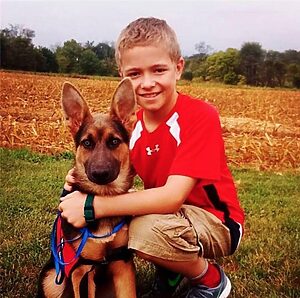
William loved to fish, and he had a gift that seemed to bring the fish wherever he went. He joined a 4H fishing club in his area which had existed for ten years when he joined. Every year, the leader of the club took the members to a small creek behind a local church. For ten years, nobody had caught a single fish in the creek. William cast his bare hook into the creek, and he caught the first fish in 10 years.
At the end of November 2015, 11-year-old William started to experience leg pain. Amy and Derek, William’s parents, assumed it was growing pains or soreness from playing outside. When his pain continued and he began to be fatigued, they grew concerned. One Friday, William’s pediatrician ordered bloodwork and referred him to an orthopedic surgeon to determine the cause of the pain. When they arrived at the orthopedic surgeon’s appointment that Monday, the doctor asked for his bloodwork results. This concerned Amy, knowing that orthopedic surgeons are usually not concerned with bloodwork.
The surgeon called the pediatrician to ask for the blood results, and William was scheduled for an appointment with hematology/oncology at Penn State Health Golisano Children’s Hospital in Hershey two days later. The next day, William fell asleep on the floor at school and developed a fever. Amy took William to the Hershey Emergency Room the day before their scheduled appointment.
In the chaos of December at the hospital, there were no pediatric oncology beds available, so they met their oncologist in the emergency room. Three weeks after he began feeling sick, William was diagnosed with leukemia.
Two weeks into treatment, standard protocol was not working. The team did more testing, and they found that William had a rare subtype of leukemia. Amy had avoided Google throughout treatment so far, but this new diagnosis left her with more questions than answers. William was the first child at Hershey with this rare cancer diagnosis. Amy Googled the new diagnosis and found that the success rate dropped from 90% to around 32%.
The plan for treatment adjusted, and in April of 2016, William got a bone marrow transplant from his older sister Leyna, who was 13 at the time. He was determined to get out of the hospital, and he asked the doctors what the quickest discharge was after a bone marrow transplant. The record was 23 days, and William said “I’m gonna beat that.”
William got a stationary exercise bike in his room, and he did everything in his power to leave the hospital. His discharge date missed the record by one day, but his body reacted very well to the transplant. His family was relieved that he was doing well, but looking back, Amy wishes she saw how concerning this was.
William took classes online throughout treatment, and he used every free moment to his advantage. In the 10-minute breaks between classes, William ran outside and rode his mini dirt bike around the yard until it was time to log back in. He also had his own turkey, who he would gobble back and forth with during cyber school.
William rang the bell at Hershey one year after his diagnosis, and he got back to his normal life. He took skating lessons for the local hockey team and spent time with his sisters at home. Five weeks later, the cancer came back “with a vengeance.” Hershey didn’t have any more options for them, so William and his family moved to Philadelphia for two months to receive the CD-19 trial, which is now the approved CAR-T therapy. William was roughly the 150th kid in the trial, and William’s family was hopeful because there was a high success rate.
Unfortunately, this treatment didn’t work for William. “Some pretty scary things happened, and even the doctors couldn’t tell us why, which made the really scary things even worse,” Amy says.
After one treatment, William couldn’t remember the password to his iPad, and within two hours he lost total control of his body’s functions, including his ability to speak. “The only thing I can equate it to is a feral animal stuck in a cage thinking that everyone wanted to hurt them,” Amy describes.
The next day, William went under anesthesia for testing, and when he woke up, he had no memory of the scary experience. The doctors couldn’t explain why this happened, but they later discovered that during the trial William’s cancer had crossed the blood/brain barrier at the worst possible time. Even though they had gotten most of the cancer out of William’s body, there was still some left. They went back to Hershey for treatment, and they planned to do radiation to remove the last 2% of cancer left in his body.
William developed an infection, which required both antibiotics and his immune system to fight off. His immune system was too weak from the bone marrow transplant, and his body was unable to fight the infection.
William passed away four days before his 13th birthday, on July 15th, 2017.
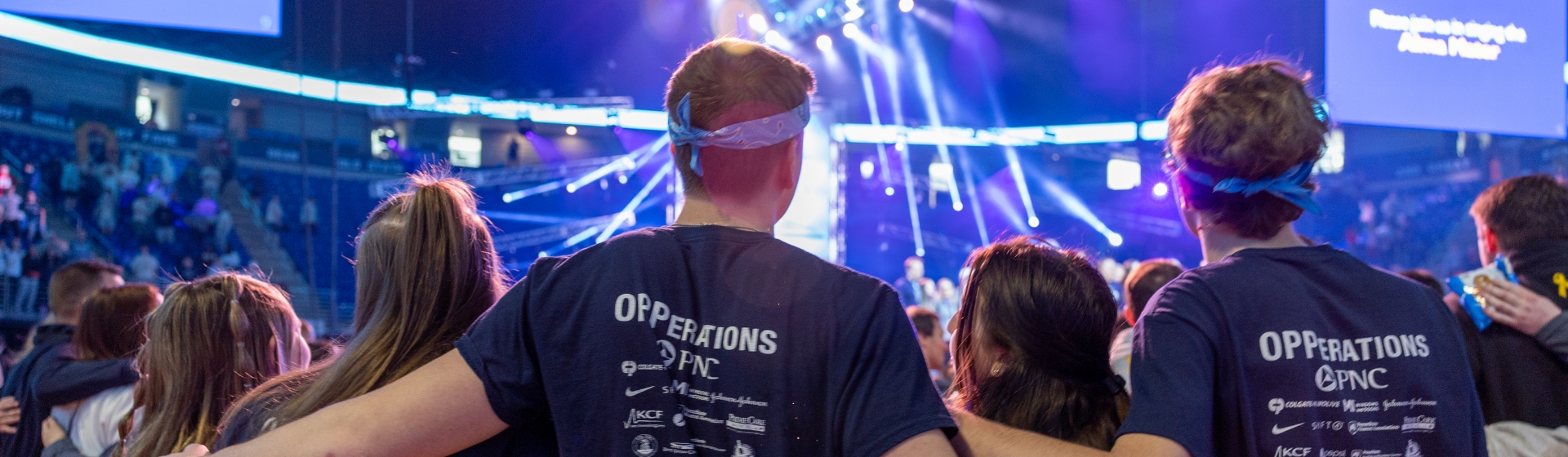
Shortly after William passed away, THON asked Derek and Amy to speak at orientation for THON volunteers. Derek initially rejected the idea, believing it was too soon and challenging to talk about. However, Derek remembered that William had shared his story on the news at an event a few months prior. William had made a lasting impact on every person watching. One man explained that he often skips past St. Jude’s commercials and pediatric cancer awareness campaigns, but he was moved by William’s interview. He ended his email to William’s family by asking “How can I help?”
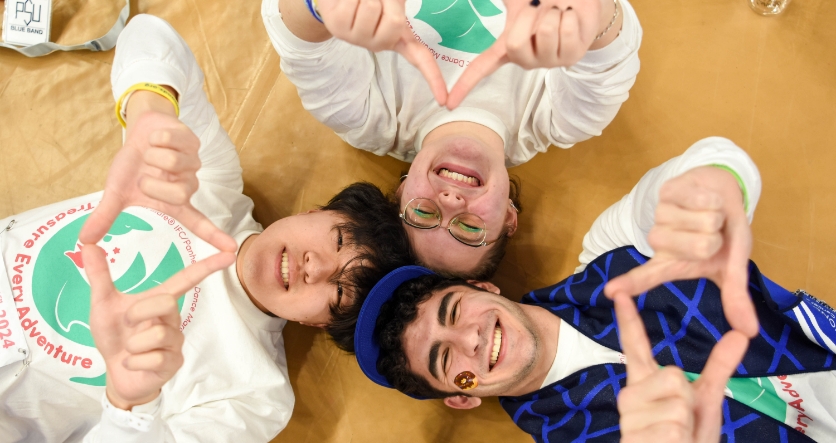
William understood the responsibility of sharing his story and giving a voice to every child. When William passed, Derek took this responsibility on, and shared William’s legacy with THON’s volunteers. Since William’s diagnosis, Derek and Amy take any opportunity to share his story and spread awareness. They have spoken at Yellow Shirt Orientation every year, on stage at THON Weekend, and at countless THON events since 2017. Their involvement reminds volunteers why we THON every year, and they will continue to show their endless support until we are dancing together in celebration of a cure.
Derek and Amy continue to share William’s story, and they also have many traditions to honor his life. Along with spending William’s birthday at Knoebel’s, they spend every July 15th doing whatever they believe William would like to do that year. Amy and Derek have also made Christmas baskets for parents and siblings of children with cancer. They gathered food and gas gift cards, toys for siblings, coffee mugs, and other small gifts to brighten the challenging season.
Four Diamonds and THON stepped in as financial support to the family, but the biggest impact came from two volunteers. The students visited Hershey one day in December and asked William if he wanted to play Xbox with them. They played for hours, and William enjoyed every moment with them in a moment of normalcy.
The following week, Amy and William went to check in to the clinic for their appointment. There was a surprise waiting for him at the front desk. The students who had played Xbox with him knew that he was not able to attend THON that year, and they sent him a box filled with THON merchandise and activities. William attended THON in the hospital that year, and he loved hanging out with the college guys and making fun of the girls.
William attended Teen Night, which was one of his favorite events. Taking place around Halloween, the room was filled with laughter and amazing costumes. His time with the THON volunteers and families were his favorite times in the hospital, making friends and leaving treatment out of his mind.
William’s family is paired with the College of Earth and Mineral Sciences, and they cherish the relationships they have made with both the students and their three other partnered families.
Many students join William’s family for their visit to Knoebel’s on William’s birthday every year.
Amy and Derek have a message for the THON volunteers: “We see all of you. The students that don’t get a lot of family involvement, the students who are not captains or are new, or their jobs or titles aren’t very big or prestigious. We just want everyone to know how important they are to us, and that what they are doing is so important.” William’s family attends THON events frequently, so if you see them, stop and say hi!
THON™ is able to donate 96 cents of every dollar raised to Four Diamonds at Penn State Health Golisano Children’s Hospital because of supporters like you. Your generosity creates moments of joy for Four Diamonds children and families and empowers our volunteers through year-round events, fundraisers and THON Weekend.